Agentic Operating Patterns
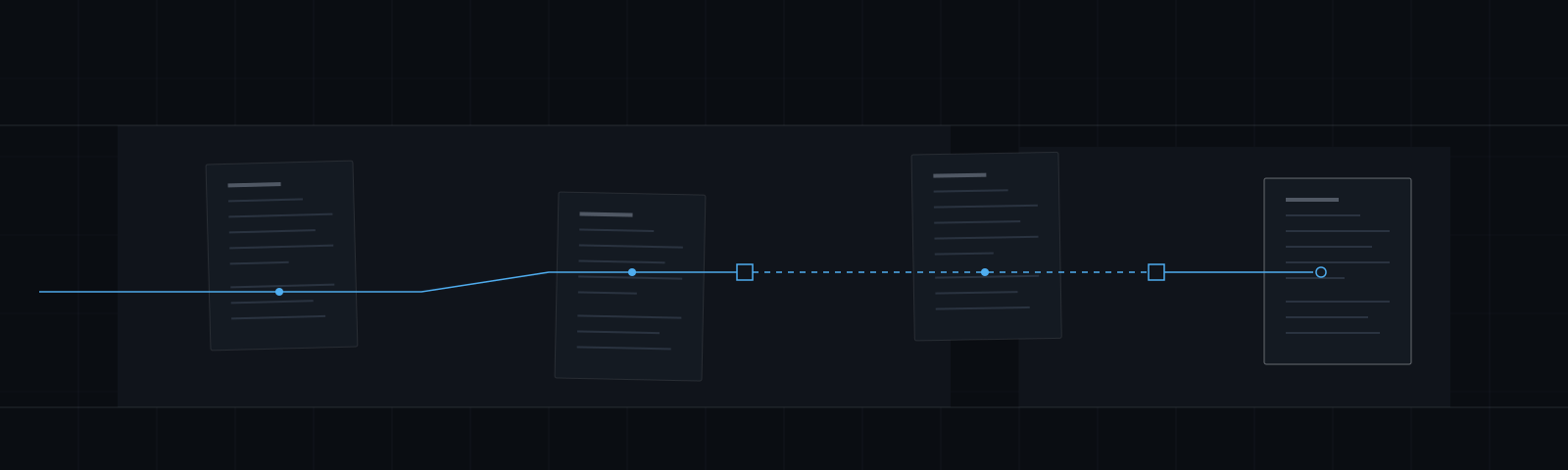
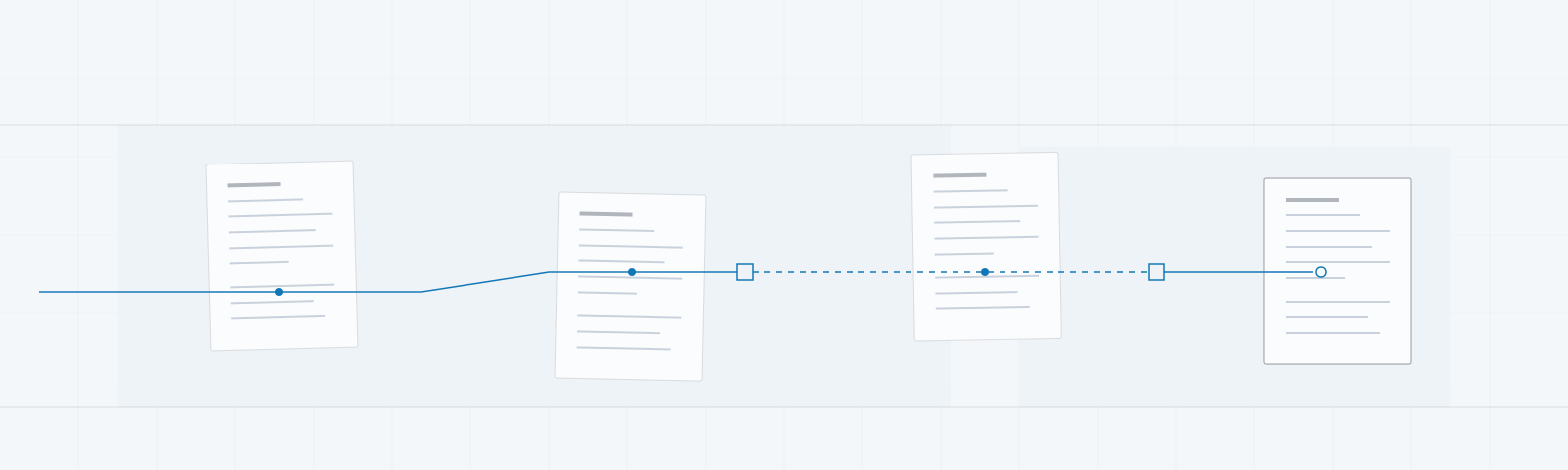
An agentic operating system is the working layer around agents: how work is routed, how context is selected, how knowledge is reviewed, how tools are bounded, and how a person accepts or rejects the result.
Agentic work becomes dependable when that layer is operated deliberately. A useful system does more than call a model. It captures valuable learning from past work, curates it into rich artifacts, preserves the relationships between those artifacts, and gives agents a governed way to retrieve that knowledge for new problems, strategies, opportunities, and decisions. This site collects the patterns behind that operating layer.
Each pattern names a problem, shows the design, gives a template or a small example, and states what it does not prove. The patterns are drawn from hands-on systems and written so the method can be reused without needing the original implementation.
The Point Of View
Method and controls decide whether agent work can be reviewed. Model choice matters, but it is not the operating system. The patterns here focus on the parts around the model: how work is routed, how context is bounded, how knowledge becomes reusable, how related artifacts stay connected, how output is checked, and where a person stays in the loop.
Who This Is For
Engineering and technology leaders who want agent systems that hold up under review, and practitioners who want reusable operating patterns rather than one-off prompts.
How The Patterns Are Written
Every pattern is written as a reusable operating method. The site shows architecture, controls, templates, and small examples. Numbers, when they appear, are reproducible examples or dated and bounded evidence.
Start Here
Start with the Knowledge Operating System. It is the flagship of this site: a local-first model for capture, candidate review, curation, governed retrieval, evaluation, and human validation. The reusable patterns compose into it.
Then open the pattern catalog. It names each pattern and the one problem it solves, and links into the detail.
Use Public Implementations when you want the map of live, planned, held, and private implementation work connected to the patterns.